
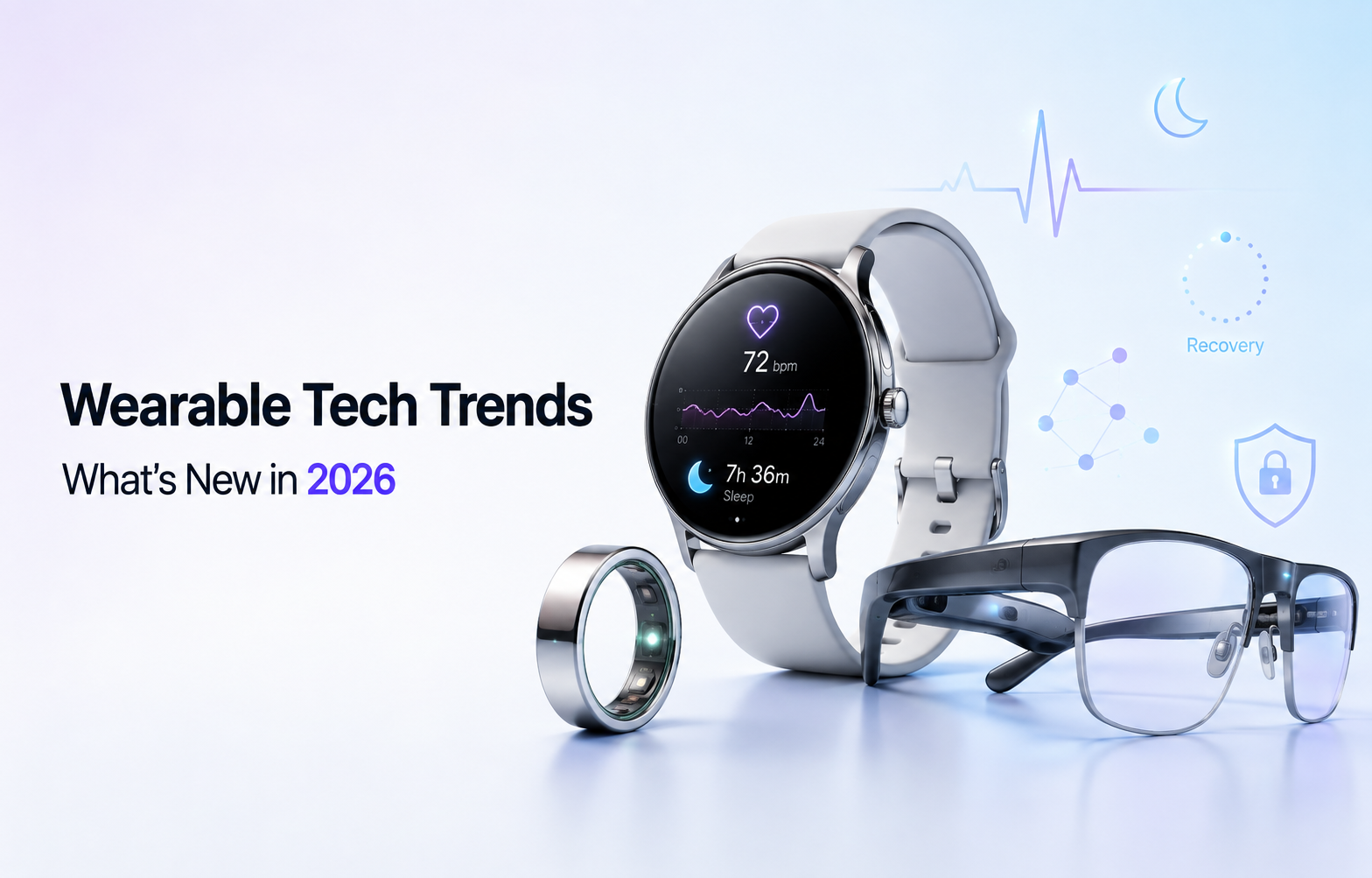
Let’s face it; until recently, I didn’t like wearable technology at all. However, I got tired of my smartwatch dying already in eight months and declared that it would be the last one for me. Now, 2026 really impressed me, and if you’ve been considering getting yourself some consumer technology lately, now is a perfect time to look at what’s out there.
The Wearable Tech Trends of this year do not only consist of gimmicky upgrades. Instead, they fix the inconveniences which made us stop using this kind of device in the first place.
Smartwatches Finally Grew Up
Who can recall charging their watch every single day at night? This is going away soon enough because better battery life is the one thing every person is looking for in a smartwatch and some are even able to last for over a week. Just imagine – now you can forget that you’re wearing any kind of gadget.
The sensors in these smartwatches became more efficient too – heart rate measuring works much better, measuring the oxygen level in your blood is not something vague anymore, and the sleep tracking shows you really how you feel after the night sleep. Small but important things.
Just take a look at what has been improved:
- Battery life stretching well past a week for most smartwatches
- More accurate heart rate and blood oxygen readings
- Sleep quality tracking that actually matches how you feel
- Faster charging when you do need to plug in
Smart Rings Are Having a Real Moment
If a watch on your wrist isn’t your style, smart rings have quietly become a favorite. No screen, no bulk, just a tiny piece of jewelry doing the same job. They’re tracking recovery time, stress levels, and daily activity without you thinking about it once.
I tried one for a month, and honestly, forgetting I had a wearable device on was the whole point. That’s the direction things are heading.
AI Powered Health Trackers Are the Real Star
Here’s where it gets really interesting. AI powered health trackers are not just throwing figures around but connecting all the dots. For instance, if you had a bad night and are stressed, you will get reminded to take it easy in your exercise routine.
AI powered health tracking is not as boring as it seems. This is like having a coach that actually understands your patterns. Workout performances and recovery time, among other elements, are now integrated into one single picture rather than multiple tables.Here’s what these trackers are actually keeping tabs on:
- Heart rate trends throughout the day, not just during workouts
- Blood oxygen levels overnight
- Stress levels based on subtle changes in your body
- Recovery time after tough workouts
- Daily activity patterns compared to your usual habits
Smart Glasses Step Into the Spotlight
Smart glasses were a punchline for years. Not anymore. The 2026 versions are lighter, look normal, and quietly handle notifications, directions, and quick health prompts without pulling out your phone. It’s early days, but AI enabled wearables like these are clearly the next frontier.
Also Read: https://gizmotechie.com/category/gadgets/
Privacy Finally Gets Some Attention
Here’s what I appreciate most. Enhanced privacy is no longer an afterthought. Brands are being upfront about where your health data goes, and giving people actual control over it. For something that tracks your heart rate and sleep every night, that matters.
Choosing the Right Wearable
With so many options now, picking one can feel overwhelming. Here’s a quick way to match the gadget to your needs:
|
If you want… |
Go with… |
Best for |
| Deep workout stats | Smartwatch | Real-time workout performance tracking |
| Something you barely notice | Smart ring | Sleep quality and recovery time |
| Hands-free notifications | Smart glasses | Quick alerts without checking your phone |
| Detailed health insights | AI powered health tracker | Heart rate, stress levels, and daily activity trends |
Think about your daily routine first, then match the gadget to it. Don’t buy the flashiest option just because it’s new.
Common Buying Mistakes
I’ve made a few of these myself, so consider this a heads up:
- Chasing features you’ll never use. Not every wearable device needs every sensor under the sun.
- Ignoring battery life. A gadget you have to charge daily quickly becomes a gadget you stop wearing.
- Skipping the privacy check. Always look into how a brand handles your health data before you buy.
- Buying based on looks alone. Comfort matters more than style once you’re wearing something 24/7.
- Not checking compatibility. Make sure it actually plays nice with your phone before you commit.
Final Thoughts
The modern wearable technology is no longer about impressing you through gimmickry. It is about actually getting to know you. Be it a smartwatch, smart ring, or even smart glasses, 2026 looks set to be the year when these devices prove their worth on your body.
At GizmoTechie, we’ll keep digging through the noise so you don’t have to. If you’re curious which wearable fits your lifestyle best, stick around, that’s exactly what we’re here for. And if you want to go even deeper, check out these wearable technology guides and expert reviews for more hands-on comparisons.
FAQs
1. Are smart rings as accurate as smartwatches?
They’re close. Smart rings excel at sleep and recovery tracking, while smartwatches still lead for workout-heavy metrics.
2. Can AI health monitors replace your doctor?
By no means. They are great for identifying patterns, but in case you spot any abnormalities, always consult your doctor.
3. Which trend is the most noticeable in wearable technology for 2026?
Enhanced battery life together with better AI analysis.
4. Are smart glasses comfortable enough to wear every day?
Yes, definitely. Current models of smart glasses weigh much less compared to the previous generations.

